
| Measure: Percentage of patients 18-75 years of age with diabetes who had hemoglobin A1c > 9.0% during the measurement period | ||
| Measure Type | High Priority Measure | Scoring |
| Outcome | Yes | A lower percentage indicates better quality |
| Denominator | Patients 18-75 years of age with diabetes with a visit during the measurement period |
| Numerator | Patients whose most recent HbA1c level (performed during the measurement period) is >9.0% |
| Denominator Exceptions | None |
| Denominator Exclusions |
|
Setup Note
This eCQM requires a lab interface to be met. Customers interested in a lab interface should contact Sevocity Support to begin the process of a new interface setup. Interface setup requirements and fees vary per request.
Denominator
Patients who meet the following criteria will be included in the denominator:
Age is ≥ 18 years and < 75 years at the beginning of the Measurement Period
AND
Have an active diagnosis of Type 1 or Type 2 diabetes during the Measurement Period
AND
- Have at least one eligible encounter during the Measurement Period finalized by the EC/EP
Encounter Codes Eligible for Denominator
CPT: 99201, 99202, 99203, 99204, 99205, 99212, 99213, 99214, 99215, 99395, 99396, 99397, 99385, 99386, 99387, 99341, 99342, 99343, 99344, 99345, 99347, 99348, 99349, 99350
HCPCS: G0438, G0439
Diagnosis
The patient must have an active diagnosis of Type 1 or Type 2 diabetes during Measurement Period. Patients with a diagnosis of secondary diabetes due to another condition are not counted.
Diagnoses are documented in the Assessment tab of an encounter. A comprehensive list of eligible diagnosis codes for diabetes can be located here.
Denominator Exclusions
A patient will be excluded from this measure if they meet any of the following conditions:
- Is in hospice care during the Measurement Period
- Age is ≥ 65 at the start of the Measurement Period and has spent more than 90 consecutive days during the Measurement Period living in long term care
- Age is ≥ 65 at the start of the Measurement Period and has evidence of advanced illness
- Age is ≥ 65 at the start of the Measurement Period and has evidence of frailty
Hospice Care Services
To document hospice care services as a procedure, go to Encounter > Orders/Procedure > Orders/Referrals and click Add to add one of the eligible codes listed below:
SNOMED CT: 385763009, 385765002
Order Status must be marked as Pending or Complete.
Note
SNOMED CT codes must be added as a Favorite in Preferences > Form Data > Orders to be accessible from the Orders/Referrals tab.
Long Term Care
To document a stay in long term care:
- Go to Chart > Admissions and click Add
- Select a Place of Service
- Optional: select a Facility
- Populate the Admit Date
- Optional: populate the Discharge Date
- Click OK
Note
If the admissions event does not have a Discharge Date when the eCQM report is generated, the length of stay will be calculated with a discharge date of the Reporting Period end date or the Measurement Period end date, whichever occurs first.
Advanced Illness
A patient has evidence of advanced illness if they meet any of the following criteria:
- Had an inpatient encounter with an active diagnosis of Advanced Illness during the Measurement Period or in the year prior
- Had 2 or more outpatient encounters with an active diagnosis of Advanced Illness during the Measurement Period or in the year prior
- Diagnosis must be active during all eligible encounters
- Was prescribed medication for dementia during the Measurement Period or in the year prior
Advanced Illness Diagnosis
“Advanced illness” refers to a wide range of conditions and includes diseases such as Alzheimer’s disease, cancer, and heart failure.
Diagnoses are documented in the Assessment tab of an encounter. A comprehensive list of eligible diagnosis codes for advanced illness can be located here.
Inpatient Encounter Codes Eligible for Denominator Exclusion
CPT: 99221, 99222, 99223, 99231, 99232, 99233, 99238, 99239, 99251, 99252, 99253, 99254, 99255, 99291
Outpatient Encounter Codes Eligible for Denominator Exclusion
CPT: 99201, 99202, 99203, 99204, 99205, 99211, 99212, 99213, 99214, 99215, 99241, 99242, 99243, 99244, 99245, 99341, 99342, 99343, 99344, 99345, 99347, 99348, 99349, 99350, 99381, 99382, 99383, 99384, 99385, 99386, 99387, 99391, 99392, 99393, 99394, 99395, 99396, 99397, 99401, 99402, 99403, 99404, 99411, 99412, 99429, 99455, 99456, 99483, 99217, 99218, 99219, 99220, 99281, 99282, 99283, 99284, 99285, 99304, 99305, 99306, 99307, 99308, 99309, 99310, 99315, 99316, 99318, 99324, 99325, 99326, 99327, 99328, 99334, 99335, 99336, 99337
HCPCS: G0402, G0438, G0439, G0463, T1015
Medication
To prescribe a medication, go to Encounter > Medications > Manage/Prescribe Meds > New Prescription. A comprehensive list of eligible dementia medications can be located here.
Frailty
A patient has evidence of frailty if they meet any of the following criteria:
- Has an active diagnosis of Frailty during the Measurement Period
- Has an active diagnosis of Frailty Symptom during the Measurement Period
- Is using a frailty device during the Measurement Period
- Has a frailty encounter during the Measurement Period
Frailty Diagnosis
“Frailty” refers to a range of conditions that includes falls and problems affecting mobility.
Diagnoses are documented in the Assessment tab of an encounter. A comprehensive list of eligible diagnosis codes for frailty can be located here.
Frailty Symptom Diagnosis
Diagnoses are documented in the Assessment tab of an encounter. The eligible diagnosis codes for frailty symptoms are:
ICD-10: R26.0, R26.1, R26.2, R26.89, R26.9, R41.81, R53.1, R53.81, R53.83, R54, R62.7, R63.4, R63.6, R64
Frailty Device Use
The use of a frailty device can be documented in the patient’s Medical or Social History.
Frailty Device Use in Medical History
To document the patient’s use of oxygen:
Go to Encounter > Past History > Structured > Medical History
Select the hardcoded Oxygen use node
Optional: select continuously or when ambulating
To document the patient’s use of a respiratory assistive device:
Go to Encounter > Past History > Structured > Medical History
Select the hardcoded Respiratory assistive device node
Optional: select BIPAP, CPAP, Home ventilator, or Ventilator

Frailty Device Use in Social History
To document a patient’s bedridden status:
Go to Encounter > Past History > Social History
Select the hardcoded Activities of Daily Living node
Select the Mobilizing/Moving subnode
Select Bedridden
Click OK to save
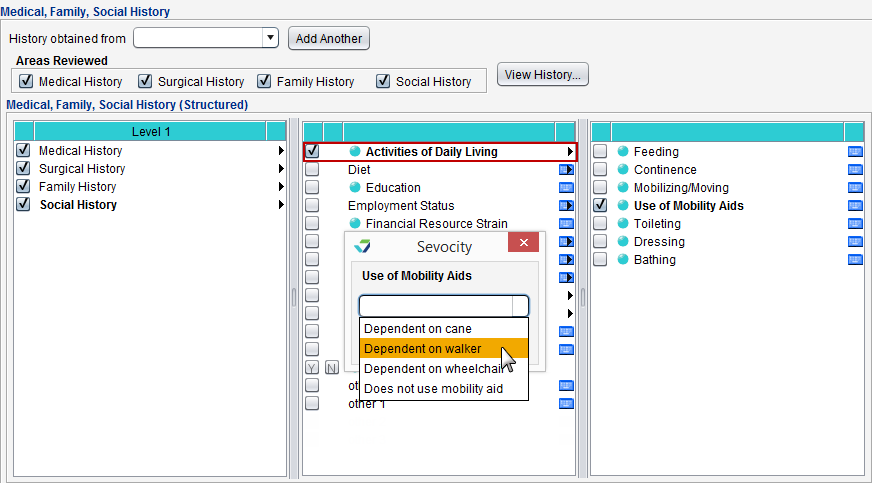
To document a patient’s use of mobility aids:
Go to Encounter > Past History > Social History
Select the hardcoded Activities of Daily Living node
Select the Use of Mobility Aids subnode
Select Dependent on cane, Dependent on walker, or Dependent on wheelchair
Click OK to save
Frailty Encounter Codes Eligible for Denominator Exclusion
CPT: 99504, 99509
HCPCS: G0162, G0299, G0300, G0493, G0494, S0271, S0311, S9123, S9124, T1000, T1001, T1002, T1003, T1004, T1005, T1019, T1020, T1021, T1022, T1030, T1031
Numerator
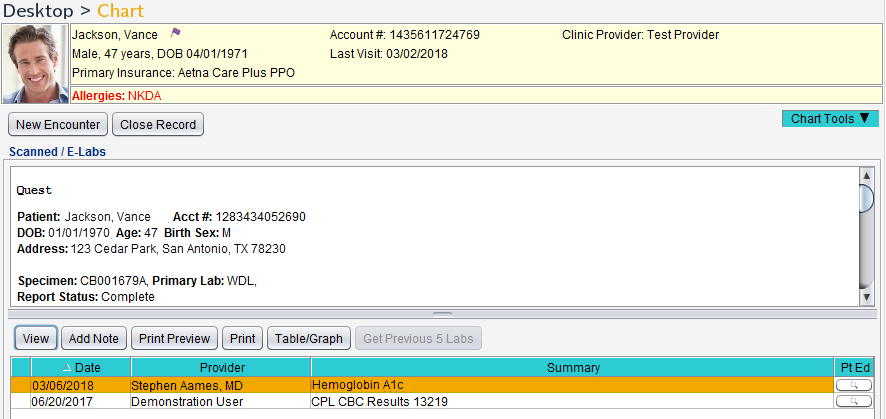
A patient will be counted in the numerator if they have an e-Lab result with an HbA1c level of > 9% stored to their chart during the Measurement Period. If there are multiple HbA1c results within the Measurement Period, the most recent result will be counted toward the numerator.
Note
A patient will be included in the numerator if the most recent HbA1c result is missing or if there are no HbA1c tests performed and no results documented during the Measurement Period.
Store e-Lab Result
- From the Clinic Inbox, select the lab result to be stored and click View
- Click Select to search for and select a patient
- Verify patient displayed matches the lab result and select the I have verified the following lab results belong to the above patient checkbox
- Click Sign/Route
- Select the Sign checkbox and click OK
Stored e-Lab results can be viewed in the Flowsheets/Labs > Scanned/E-Labs tab of the patient chart.
eCQI Reference
Return to 2021 eCQMs